Existing Ideals about the Influence of Hydrogen on the Properties of Aluminum Alloys. Report 1
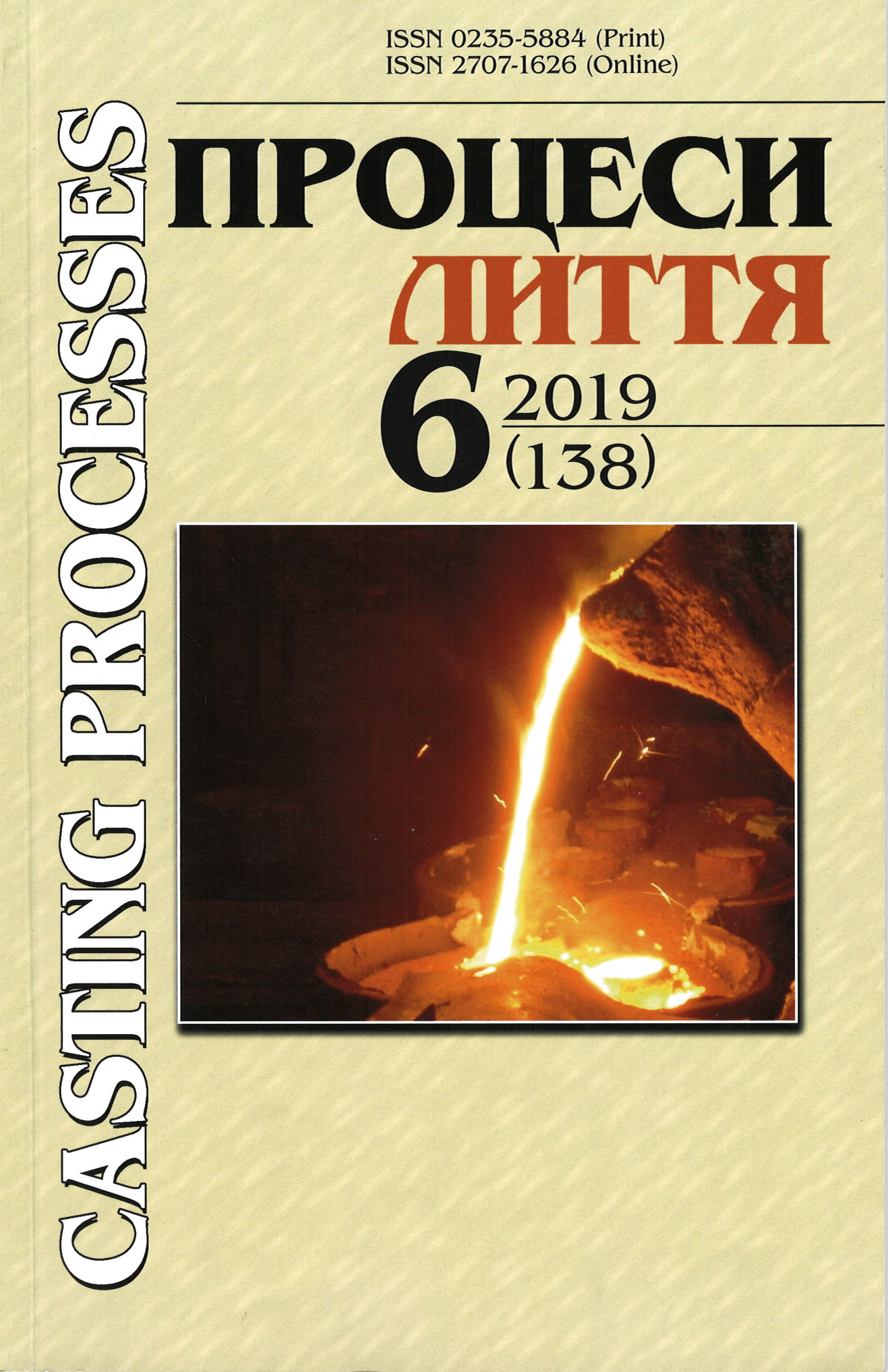
Processy litʹâ, 2019, Tom 138, №6, p.17-29
DOI:
https://doi.org/10.15407/plit2019.06.017Keywords:
aluminum alloys, casting, hydrogen, dual influence, modifier, refining, economyAbstract
Received 25.09.2019
UDK 669.715:669.788
The presented literature review chronologically describes the development of the double influence of hydrogen on the formation and quality of castings of aluminum alloys and, accordingly, the ambiguous treatment of it by scientists and foundry men. Until the middle of the last century, there was a unanimous opinion that hydrogen is a very harmful impurity, the cause of various types of defect, a decrease in the yield of suitable and worsening economic indicators of production, so it is necessary to minimize its content in ingots and shaped castings. However, studies carried out in the following years have shown that the use of dissolved hydrogen in aluminum alloys as an alloying or modifying element can significantly strengthen a number of alloys in the deformed state while maintaining a satisfactory plasticity, for the first time to provide the possibility of cold plastic deformation of eutectic silumin. Hydrogen plays a particularly important role in the formation of complex shaped castings with metal nodes, the feeding of which, in order to eliminate concentrated shells and weights, requires an increase in the number of overlaps, technological overlaps and slopes with high unproductive costs of liquid metal, which is not economically profitable. At the same time, increasing the content of hydrogen in the melt allows you to replace the malignant shrinkage defects with a permissible dispersed gas microporosity, keeping the configuration of the casting close to the parts drawing and improving the tightness of metal-intensive units. In addition, the generally recognized positive effect of hydrogen porosity on increasing fracture toughness and reducing heat brittleness. The mechanical properties remain at the level of operational requirements. In practical terms, hydrogen refining of aluminum alloys deserves attention as the cheapest environmentally friendly refining method which, unlike other methods, provides for the selective removal of the largest fraction of solid inclusions, leaving small ones to play the role of embryo crystals. In this method, the melting of pre-flooded charge materials is transformed from a traditionally polluting melt into a refinery. The review includes the latest developments of the PTIMA of the NAS of Ukraine, which first answered the question: if in some organizations (VILS, MATI) bubbling melt water treatment is used for contamination (for research purposes) by Al2O3 inclusions, and in others (PTIMA of the NAS of Ukraine) using the same operation selectively remove the largest fraction of the same inclusions, so what really happens?; mechanism for replacement of gas porosity by shrinkage at autoclave and low-pressure casting is disclosed; the properties of porous metal are studied, which is important for the evaluation of the operational state of metal capacitive nodes of castings with a porous structure; cases of local leakage in the gas porosity zone; hydrogen porosity - an indicator of the content in the melt of Al2O3 inclusions with the possibility of using the results of the analysis in the course of melting; hydrogen as part of the liquid state structure; combining flooding with other types of melt treatment.
References
Goltsov, V. A. (1995) History, ideology and prospects of hydrogen processing of materials. Vodorodnaya obrabotka materialov. Chast 1. Donetsk: DGTU, pp. 7–14 [in Russian].
Borisov, G. P., Kotlyarskyi, F. M. (2001) Hydrogen in technologies for aluminum alloys casting. Progress in Hydrogen Treatment of Materials. Donetsk-Coral Gables, pp. 315–325 [in English].
Kotlyarskyi, F. M. (2011) Hydrogen in aluminum alloys and castings. К.: Оsvita Ukrainy, 208 p. [in Russian].
Kurdyumov, A. V., Inkin, S. V., Chulkov, V. S., Grafas, N. I. (1980) Flux processing and filtering of aluminum melts. Moscow: Metallurgiya, 196 p. [in Russian].
Opie, W. R., Grant, N. J. (1950) Hydrogen solubility in aluminium and some aluminium alloys. Transactions metallurgical Sostety AJME, vol. 188, no. 10, p. 1237 [in English]. https://doi.org/10.1007/BF03399138
Chernega, D. F., Byalik, O. M., Shabas, E. D., Pogorelyy, V. T. (1967) Change in gas saturation of the AЛ9 alloy during melting. Liteynoe proizvodstvo, no. 9, pp. 14–15 [in Russian].
Altman, M. B., Glotov, Ye. B., Ryabinina, R. M., Smirnova, T. I. (1970) Vacuum refining of aluminum alloys. Мoscow: Metallurgiya, 160 p. [in Russian].
Chernega, D. F., Byalik, O. M. (1972) Hydrogen in cast aluminum alloys. К.: Tekhnika, 145 p. [in Russian].
Dobatkin, V. I., Gabidullin, R. M., Kolachev, B. A., Makarov, G. S. (1976) Gases and oxides in aluminum deformable alloys. Moscow: Metallurgiya, 263 p. [in Russian].
Altman, M. B., Glotov, Ye. B., Zasypkin, V. A., Makarov, G. S. (1977) Evacuation of aluminum alloys. Moscow: Metallurgiya, 240 p. [in Russian].
Practice for the production of castings from aluminum alloys (1982) EI TOLP, no. 23, ser. 3, pp. 8–13 [in Russian].
Goltsev, V. A., Stromskaya, N. P., Zhezher, V. F., Shkrob, T. P., Prostova, N. I. (1986) Development of a unified scale of gas porosity of castings from silumins. Liteynoe proizvodstvo, no. 12, pp. 9–10 [in Russian].
Obtaining castings with a guaranteed level of quality (1987) EI TOLP, no. 7, ser. 3, pp. 1–3 [in Russian].
Kotlyarskyi, F. M. (1991) Formation processes and methods for reducing the physical and chemical heterogeneity of castings from aluminum-silicon alloys: Doctor’s thesis. К.: IPL AN USSR, 444 p. [in Russian].
Tema NIR 1.6.5.452 (2000) Investigation of the effect of hydrogen melt supersaturation as an independent factor in controlling the processes of formation of the structure and properties of aluminum alloys. К.: PTIMA NANU, 43 p. [in Russian].
Kotlyarskyi, F. M., Borisov, G. P., Belik, V. I., Vernidub, A. G. (2004) The effect of hydrogen treatment of silumine melts on the mechanical properties of castings. Protsessy litya, no. 2, pp. 56–61 [in Russian].
Shabas, E. D., Chernega, D. F. (1969) Production of large castings from ВАЛ5 alloy. Progressivnaya tekhnologiya liteynogo proizvodstva, Gorkiy: VVKI, pp. 360–363 [in Russian].
Yefimov, V. A., Borisov, G. P., Abramova, V. P., Rudenko, N. G., Stepanov, O. M., Kotlyarskyi, F. M. (1978) The effect of non-metallic inclusions and gases on the mechanical properties of silumintype alloys. Novoe v lite s protivodavleniem, Sofiya, BAN, pp. 66–71 [in Russian].
Gulyaev, B. B. (1976) Theory of foundry processes. L.: Mashinostroenie, 214 p. [in Russian].
Kotlyarskyi, F. M. (1994) The complex effect of the gas saturation of the melt and the intensity of solidification on the formation and properties of castings from aluminum alloys in the conditions of non-profit casting. Protsessy litya, no. 2, pp. 96–106 [in Russian].
Kotlyarskyi, F. M. (1990) The formation of castings from aluminum alloys. К.: Naukova dumka, 216 p. [in Russian].
Vashchenko, K. I., Chernega, D. F., Byalik, O. M. (1969) The effect of hydrogen on the technological properties and quality of castings from aluminum-silicon alloys. Progressive foundry technology, Gorky: VVKI, pp. 337–340 [in Russian].
Fomin, B. A., Spasskiy, A. G. (1961) The effect of gases on the modification of hypereutectic silumins. Liteynoe proizvodstvo, no. 4, pp. 24 [in Russian].
Belov, V. D. (1998) On the integrated processing and formation of the structure of piston hypereutectic silumins. Izv. vuzov. tsv. met., no. 4, pp. 29–32 [in Russian].
Abramov, A. A. (1984) Hydrogen in cast aluminum alloys. Sb. VOT. Seriya 16, vyp. 1 [in Russian].
Kolachev, B. A. (1994) Hydrogen brittleness of aluminum alloys and methods for its prevention. Tekhnologiya legkikh splavov (VILS), no. 5–6, pp. 19–28 [in Russian].
Bjӧrkergen, L. E. et al. (1993) The effect of porosity on the fatigue characteristics of various castings. Doklad na 60-m Mezhdunarodnom Kongresse liteyshchikov, Gaaga [in English].
Abramov, A. A., Zelov, V. B. (1984) Hydrogen in cast aluminum alloys. Liteynoe proizvodstvo, no. 1, pp. 10–12 [in Russian].
Korotkov, V. G. (1969) Refining aluminum alloys with high cryolite fluxes. Progressivnaya tekhnologiya liteynogo proizvodstva, Gorkiy: VVKI, pp. 352–355 [in Russian].
Ryzhikov, A. A., Koryakin, G. I., Yaroslavtsev, O. I., Maslov, P. N. (1969) Development and implementation of the out-of-furnace refining process of the AL30 alloy with liquid fluxes. Progressivnaya tekhnologiya liteynogo proizvodstva, Gorkiy: VVKI, pp. 332–336 [in Russian].
Andreev, A. D. (1966) On improving the quality of aluminum alloy ingots. Light alloy technology (VILS), no. 6, pp. 48–53 [in Russian].
Kolachev, B. A., Gabidullin, R. M., Kravchenko, V. Ye. (1981) The hydrogen brittleness of aluminum alloys. Legirovanie i obrabotka legkikh splavov, Мoscow: Nauka, pp. 126–133 [in Russian].
Shvetsov, I. V., Shvetsova, G. B., Yelagin, V. I., Kolachev, B. A. (1970) The effect of hydrogen on the structure and mechanical properties of ingots from AK8 alloy. Gazy v legkikh metallakh, Trudy MATI, no. 71, pp. 58–67 [in Russian].
Afanasev, V. K., Popova, M. V., Prudnikov, A. N., Zezikov, M. V., Gorshenin, A. V. (2005) Hydrogenalloying element of aluminum alloys. Izv. vuzov. Chernaya metallurgiya, no. 6, pp. 36–39 [in Russian].
Klevtsov, G. V. (1990) The influence of casting methods on the structure and fatigue strength of ВАЛ8 aluminum alloy. Izv. vuzov. Tsvetnaya metallurgiya, no. 5, pp. 96–102 [in Russian].
Makarov, G. S. (1983) Gas refining of aluminum alloys. Мoscow: Metallurgiya, 119 p. [in Russian].
Lipchin, T. N. (1985) Efficiency of hardening alloys during crystallization under pressure. Liteynoe proizvodstvo, no. 3, pp. 13–15 [in Russian].
Zasypkin, V. A., Rucheva, N. V. (1968) Internal defects in deformed aluminum semi-finished products. Alyuminievye splavy. Vyp. 5. Konstruktsionnye splavy, Мoscow: Metallurgiya, pp. 5–8 [in Russian].
Sand casting and chill casting (1988) EI TOLP, no. 7, seriya 3, pp. 4–18 [in Russian].
Merfi, A. Dzh. (1959) Smelting and casting of non-ferrous metals and alloys. Мoscow: Metallurgizdat, 646 p. [in Russian].
Afanasev, V. K. (1986) On the features of changes in the properties of silumins after heating in the range of 200–300 °C. Zakonomernosti formirovaniya struktury splavov evtekticheskogo tipa. Chast ІІ. Dnepropetrovsk: DMetI, pp. 86–87 [in Russian].
Abramov, A. A. (1983) The effect of hydrogen content in the melt before crystallization on the mechanical and operational properties of high-strength cast aluminum alloys. Vysokoprochnye tsvetnye splavy i progressivnye metody proizvodstva otlivok, Moscow: MDNTP, p. 12 [in Russian].
Pobezhimov, P. P., Nefedova, L. P., Belov, Ye. V. (1989) Metallurgy of corrosion-resistant aluminum alloys and castings. Мoscow: Metallurgiya, 152 p. [in Russian].
Abramov, A. A., Zelov, V. B. (1977) The effect of hydrogen on the density and tightness of aluminum cast alloys. Sovremennye metody obespecheniya vysokogo kachestva otlivok, L.:LDNTP, p. 82 [in Russian].
Ivanov, V. P. (1971) The effect of small lithium additives on the gas content and mechanical properties of aluminum. Izv. vuzov. tsv. met., no. 3, pp. 118–121 [in Russian].
Gabidullin, R. M., Zasypkin, V. A., Yushin, V. D., Titov, V. N. (1968) On the distribution of hydrogen in a metal during crystallization. Alyuminievye splavy. Konstruktsionnye materialy. Мoscow: Metallurgiya, Vyp. 5, pp. 14–21 [in Russian].
Afanasev, V. K., Popova, M. V. (2004) The use of hydrogen to obtain the necessary properties of aluminum alloys. Vodorodnaya obrabotka materialov: «VOM–2004», Donetsk, Don NTU, pp. 243–245 [in Russian].
Afanasev, V. K., Nikitin, V. I. (1976) The structure and properties of aluminum alloys depending on the conditions for the preparation of charge materials. Liteynoe proizvodstvo, no. 4, pp. 16–17 [in Russian].
Afanasev, V. K., Prudnikov, A. N. (1988) Effect of solid-liquid deformation and charge hydrogenation on the properties of castings from aluminum alloys. Liteynoe proizvodstvo, no. 9, pp. 12–13 [in Russian].
Nikitin, V. I. (1995) Inheritance in cast alloys. Samara, SGTU, 248 p. [in Russian].
Afanasev, V. K., Afanaseva, I. N., Popova, M. V. (1998) Hydrogen and properties of aluminumsilicon alloys, Abakan: Khakasskoe kn. izd-vo, 192 p. [in Russian].
Popova, M. V. (2002) Doping silumins with hydrogen, phosphorus and fluorine to obtain alloys with low thermal expansion. Metallurgiya mashinostroeniya, no. 6 (9), pp. 30–32 [in Russian].
Prudnikov, A. N., Sprukul, G. I., Sushkova, I. A. (1986) The influence of alloying and melt processing on the properties of castings from eutectic and hypereutectic silumins. Zakonomernosti formirovaniya struktury splavov evtekticheskogo tipa, Dnepropetrovsk: DMYeTI, pp. 259–260 [in Russian].
Fedotov, V. M. (1994) The technology of preparation of hypereutectic silumins. Tekhnol. ser. resursosbereg. protsessy, oborud., mater., no. 1–2, pp. 68–71 [in Russian].
Borbe, P. C., Erdmann-Jesnitzer, F., Schoebel, W. (1983) Beitrag zum Wasserstoffeinfluβ auf das Zeitstandsverhalten von Aluminium-Lickel-Legierungen. Aluminium (BRD), Vol. 59, no. 4, pp. 271–276 [in German].
Altman, M. B. (1964) Non-metallic inclusions in aluminum alloys. Мoscow: Metallurgiya, 127 p. [in Russian].
Krupman, L. I., Onopchenko, V. M., Komarov, A. A., Shcherbakov, A. I. (1973) Liquid alloy casting of aluminum alloys. Tekhnologiya legkikh splavov (VILS), no. 12, pp. 29–32 [in Russian].
Krushenko, G. G., Vasilenko, Z. A. (1988) Density and mechanical properties of silumin thermally processed in a liquid state. Rasplavy, no. 6, pp. 67–69 [in Russian].
Plastinin, V. A. (1969) Getting aluminum die casting using vacuum. Progressivnaya tekhnologiya liteynogo proizvodstva, Gorkiy: VVKI, pp. 466–469 [in Russian].
Dorofeev, A. V., Kilin, A. B., Tertishnikov, A. S. (2002) Processing of aluminum melts by electric current. Liteyshchik Rossii, no. 2, pp. 19–21 [in Russian].
Shapovalov, V. I. (1995) Cast porous alloys: production, structure, properties and application. Metall i lite Ukrainy, no. 2, pp. 2–10 [in Russian].
Sonsino, C. M., Dietrich, K. (1991) Einfluβ der Porositat auf das Schwing-festigkeitsverhalten von Aluminium-Guβwerkstoffen-Teil 1. Giesser. Forsch, Vol. 43, no. 3, pp. 119–130 [in German].
Achimovich, Z. S., Tomovich, M. N., Tomovich, S. M., Dzhurichich, M. R. (1994) Quality of castings from silumin obtained by casting according to gasified models. Liteynoe proizvodstvo, no. 12, pp. 18–19 [in Russian].
Kotlyarskyi, F. M. (1983) Theoretical background of the formation of shrinkage and gas defects in non-impregnated casting units. Liteynoe proizvodstvo, no. 7, pp. 22–24 [in Russian].
Kotlyarskyi, F. M., Belik, V. I. (1985) Casting quality after thermal processing of aluminum-silicon melts. Liteynoe proizvodstvo, no. 6, pp. 9–11 [in Russian].
Downloads
Published
Issue
Section
License
Copyright (c) 2019 Ф. М. Котлярський

This work is licensed under a Creative Commons Attribution 4.0 International License.